False Creek · Vancouver Coast
Rescuing
ocean friends.
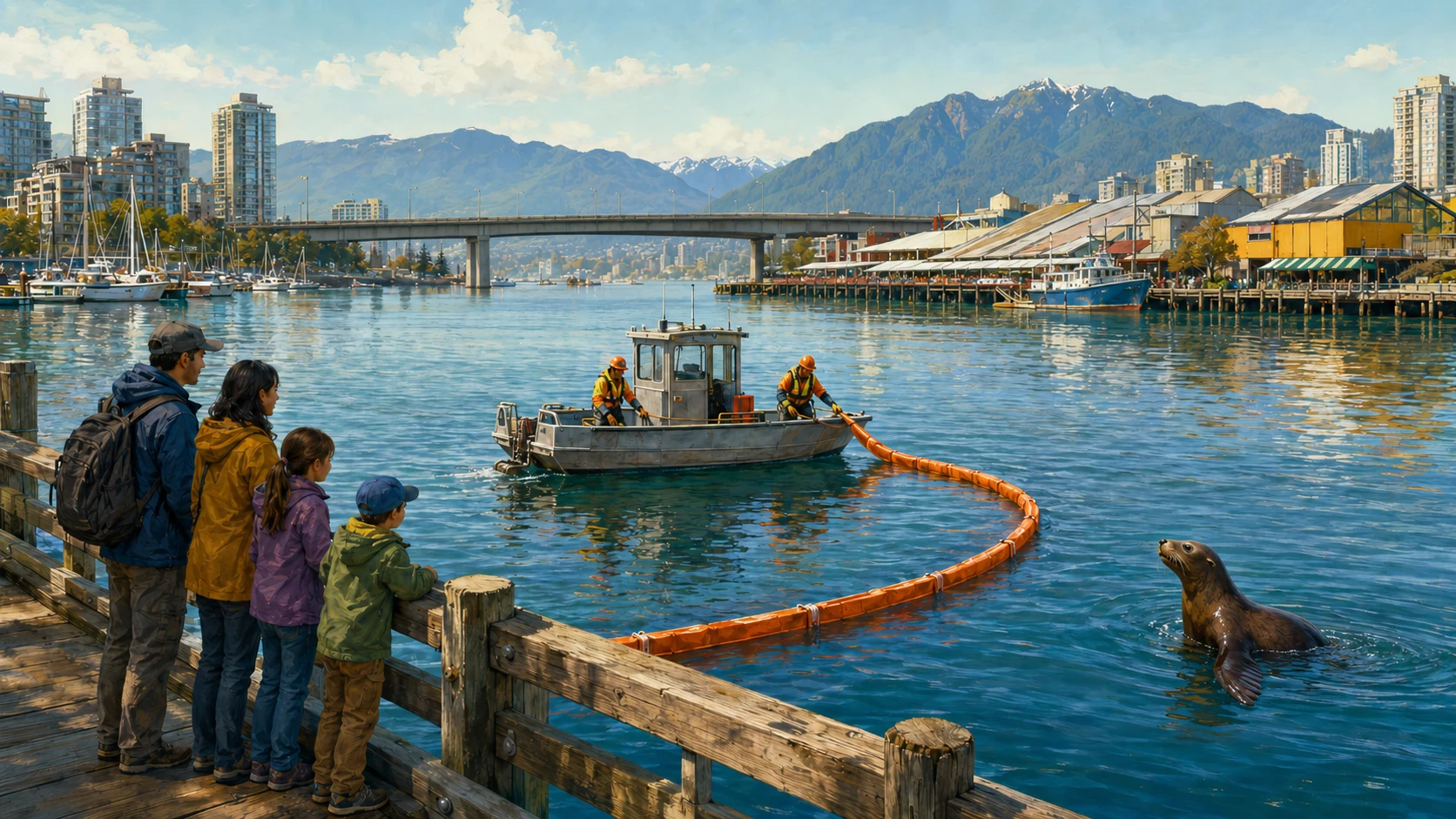
Follow the Maple Explorers to a working Vancouver harbour, where sea-lion senses, moving water and one smart floating boom reveal how to help wildlife the safe way.
PLACEFalse Creek, Vancouver
WILDLIFEPacific Steller sea lion
BIG IDEACurrents carry floating litter
SAFE ACTIONObserve, record, report
Aspen notices nature
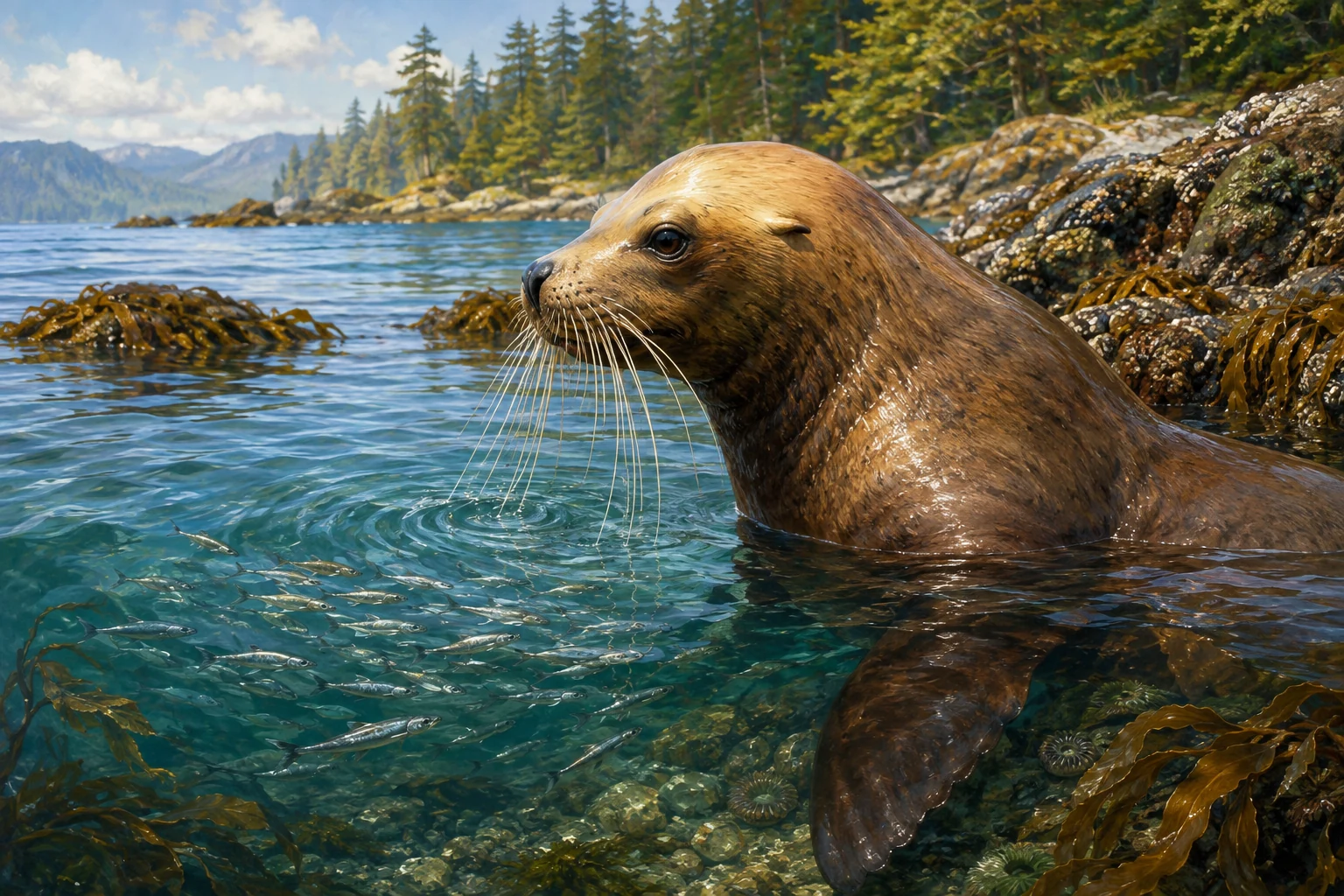
A swimmer built to read the water
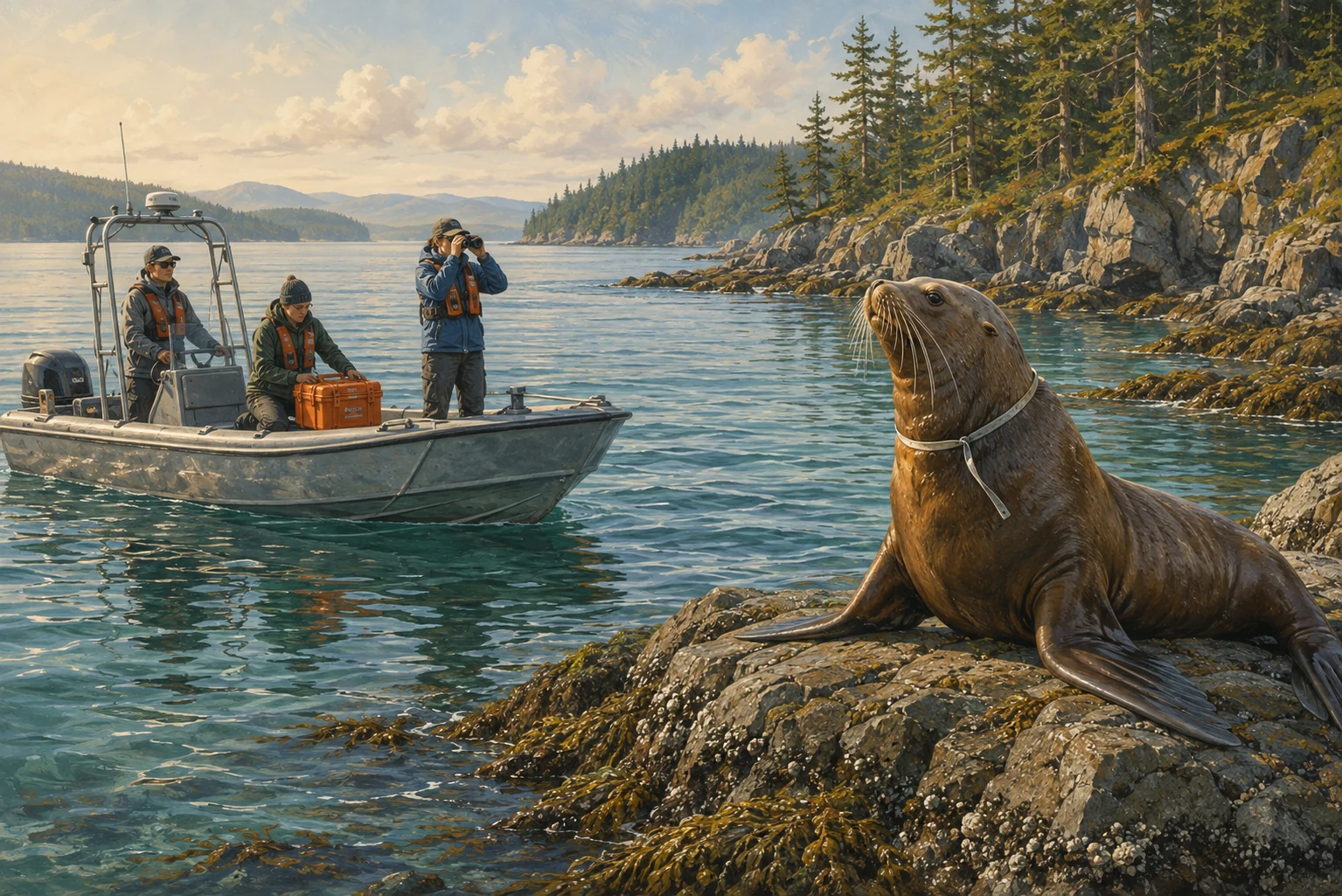
Steller sea lions are powerful Pacific swimmers. Their long front flippers provide thrust, while sensitive whiskers—called vibrissae—help them notice tiny movements in the water around prey.
Follow a ripple
Each whisker can bend as water moves past it, helping a sea lion track nearby motion.
Power and steer
Long front flippers drive the swim. Rear flippers help with steering and can rotate forward on land.
Rest matters
Rocks, docks and other haul-outs are places to rest. Quiet space lets the animal choose what to do.
Watch the animal
If it stares, fidgets or dives away, you are too close. Back up calmly and use binoculars.
Hazel follows the science
How can a wrapper on land reach the sea?
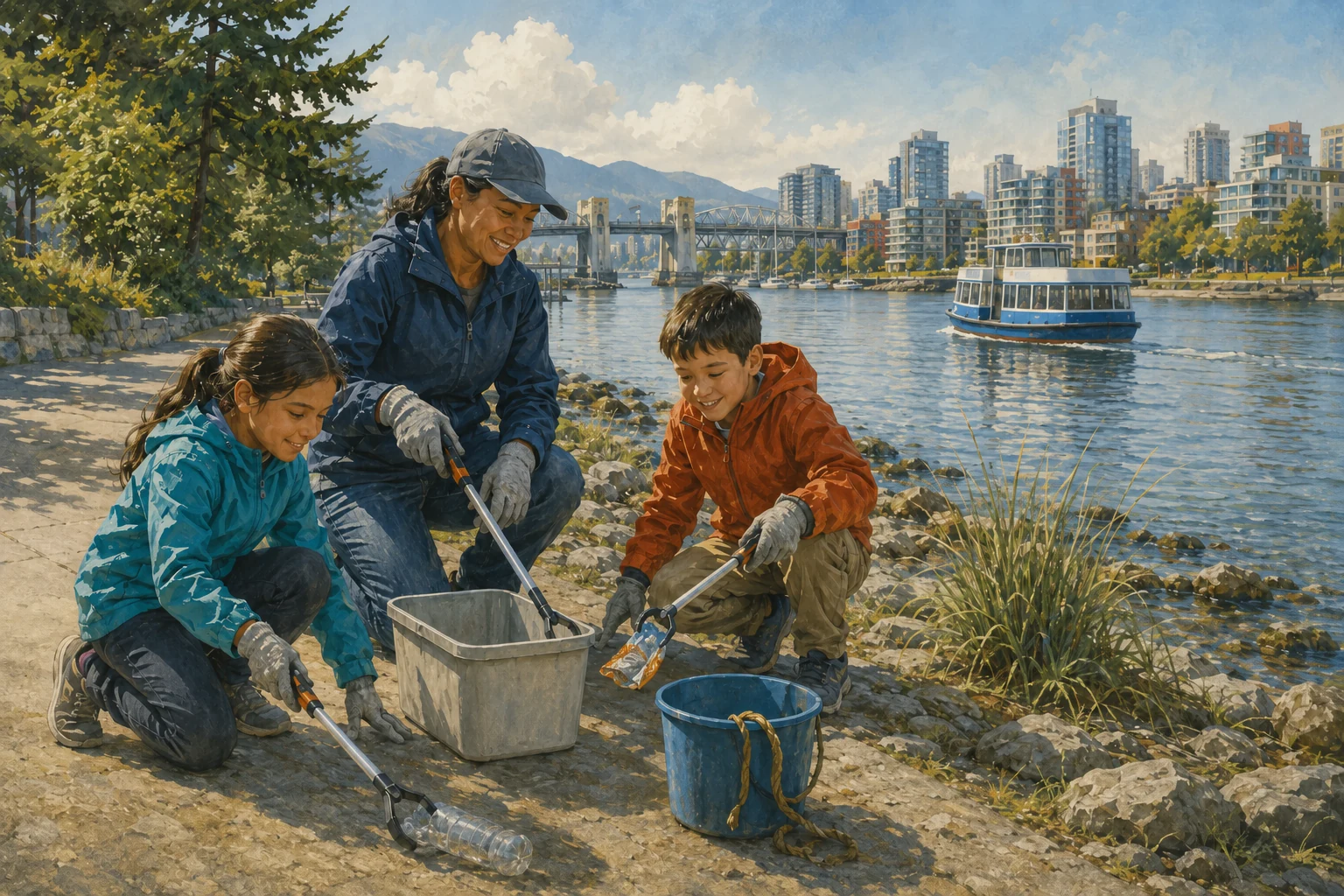
Litter can be blown into a drain or washed downhill by rain. Streams, rivers and harbour currents can carry it farther, where wildlife may become entangled or mistake small pieces for food.
Choose reusables and join an organized cleanup with an adult. Wear gloves, use a grabber and leave sharp or unknown objects alone.
Barrett figures out how
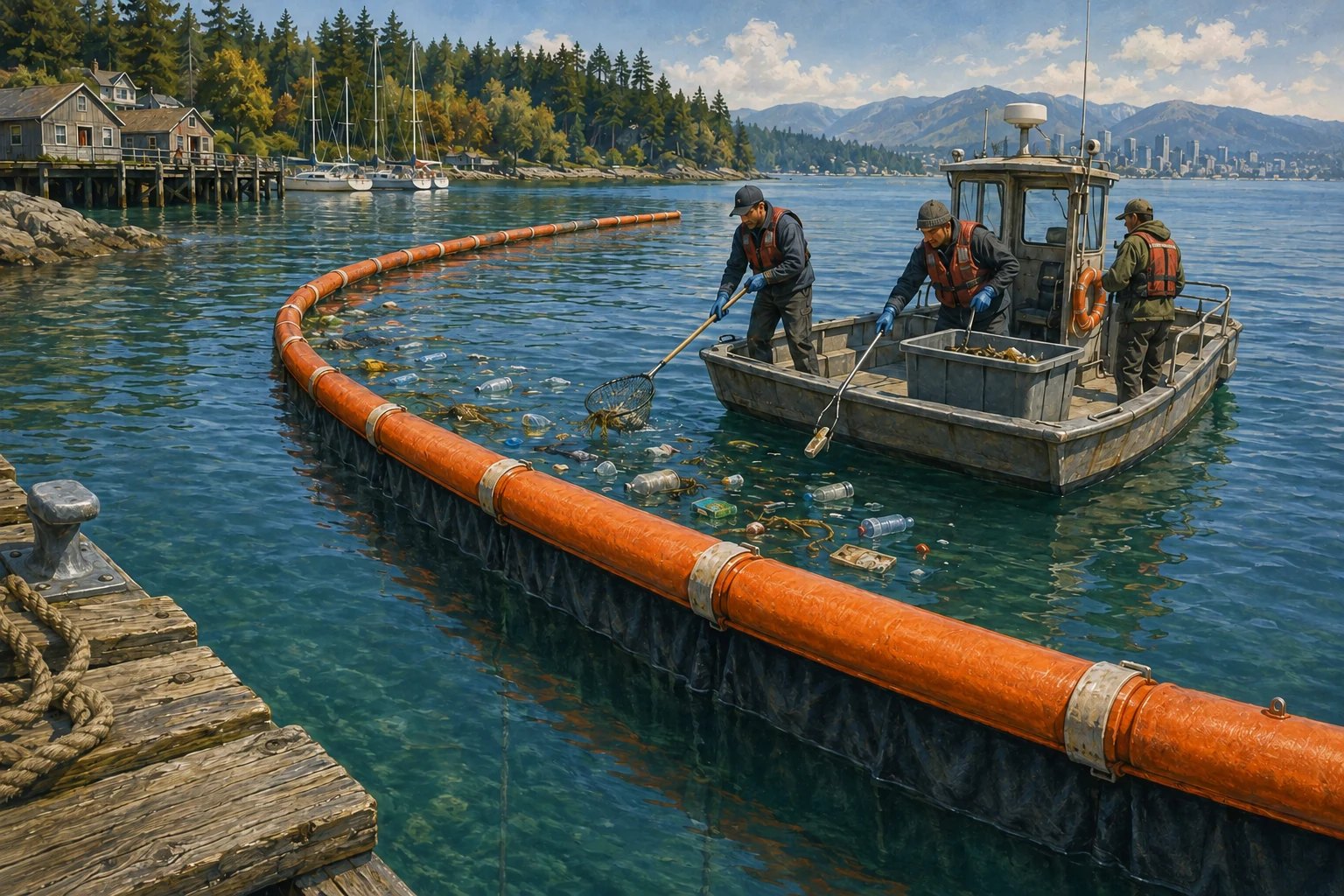
A floating fence for drifting debris
In the story, linked orange floats keep the boom at the surface while a flexible skirt hangs below. Together they slow and gather light debris so trained adults can collect it from a controlled work area.
- 1
Floats stay visible
Linked sections follow the surface as small waves pass.
- 2
A skirt hangs below
The flexible barrier helps debris stay on the collection side.
- 3
Crews remove litter
Adults use nets and grabbers while keeping open water clear for wildlife.
Safe help is the best help
Observe. Record. Report.
A rope or packing band can tighten as an animal grows. Never chase, touch, feed or try to free a sea lion yourself. Trained responders plan each rescue around the animal, the tide, the site and the safest equipment.
Stay on shore or at a safe lookout and keep pets leashed.
Record the time, exact location and what you can see.
In Pacific Canada, phone DFO at 1-800-465-4336.
Do not enter the water or approach unless a responder tells you to.
Lumi shows where
A real-place Vancouver waterfront overview
The chapter's Fishermen's Wharf setting points to False Creek Harbour Authority at 1505 West 1st Avenue, just west of Granville Island. This map places that wharf and four nearby family stops against City of Vancouver shoreline, park and street data.

Story setting: False Creek Fishermen's Wharf is a real working harbour. The rescue scene is fictional, and wildlife sightings are never guaranteed.
Plan smart: Use current visitor information, local signs and official route tools. This overview is for exploration—not marine or road navigation.
Map licence: Contains information licensed under the Open Government Licence – Vancouver. This adaptation is not an official City of Vancouver map and is not endorsed by the City of Vancouver.
Four explorers · four ways to learn
The field-journal ideas behind this guide
Aspen studies sea-lion adaptations, Hazel traces plastic pollution, Barrett tests a boom design, and Lumi connects the story to Vancouver's coast.
Pacific Adventure · Chapter 5
Read Rescuing Ocean Friends
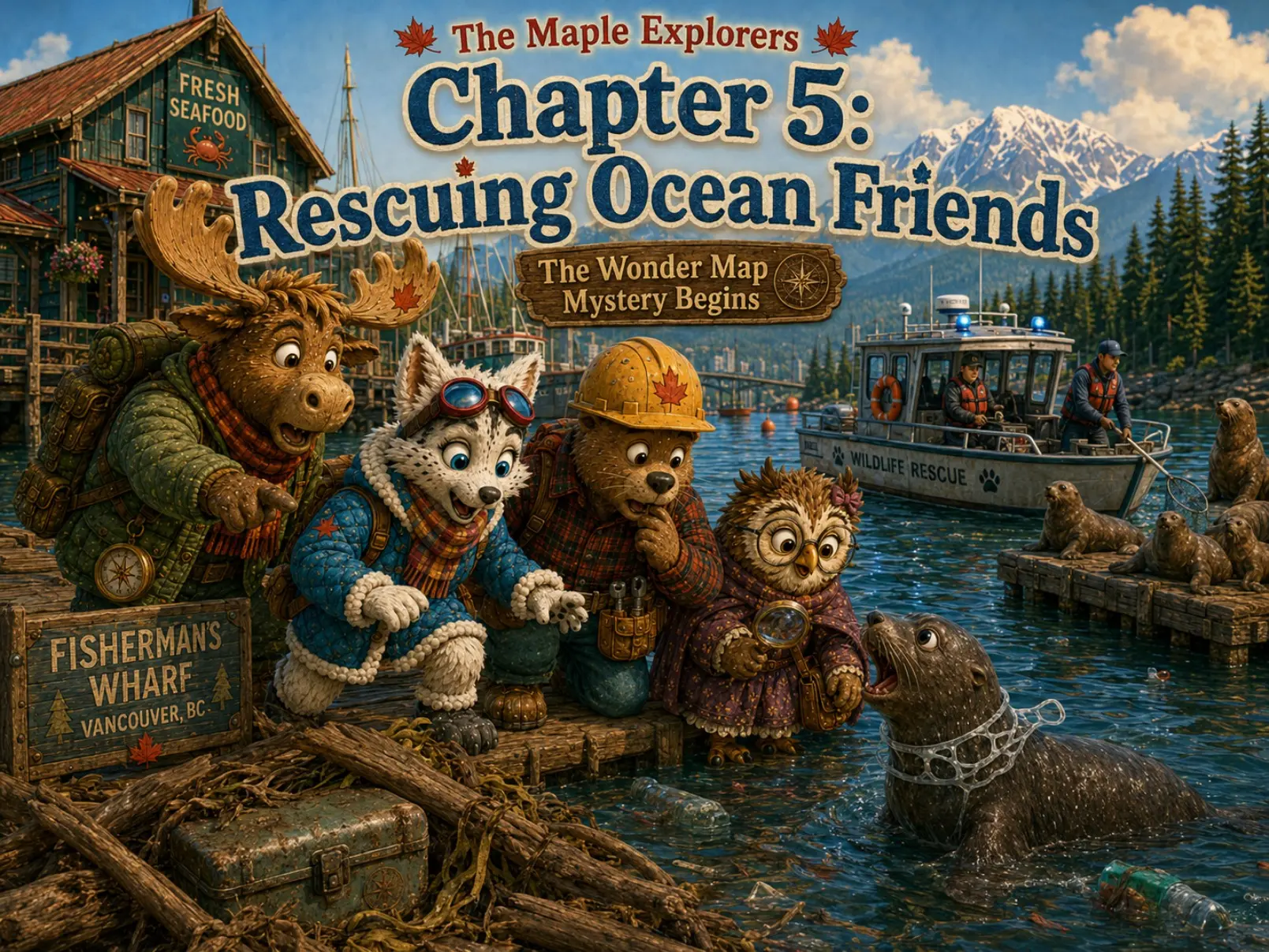
At a Vancouver harbour, the friends spot an entangled young sea lion, call trained rescuers, build a litter boom—and discover the first clue in the Wonder Map mystery.
Questions kids ask
Sea lions and ocean rescue FAQ
Quick answers for families, classrooms and young coastal explorers.
Are sea lions and seals the same animal?
No. Sea lions have visible ear flaps, long front flippers and rear flippers that rotate forward. True seals have small ear openings and usually wriggle on land.
Why is plastic dangerous to marine wildlife?
Animals can become tangled in rings, straps, rope and fishing line. Some also mistake pieces for food. Plastic can stay in the environment and break into smaller pieces.
Does a floating boom catch a sea lion?
No. The boom in the story gathers floating litter. Trained responders keep animals an open route and decide how to conduct a rescue safely.
What should I report?
In Pacific Canada, report a dead, injured or entangled marine mammal to DFO's 24/7 hotline. Share the time, location and clear observations without approaching the animal.
Can families visit Fishermen's Wharf?
False Creek Fishermen's Wharf is a real working harbour with public fish sales and nearby waterfront paths. Check current access information, respect work areas and never enter a closed dock.
Research trail
Official and specialist sources
These links support the wildlife, pollution, rescue and place guidance on this page.