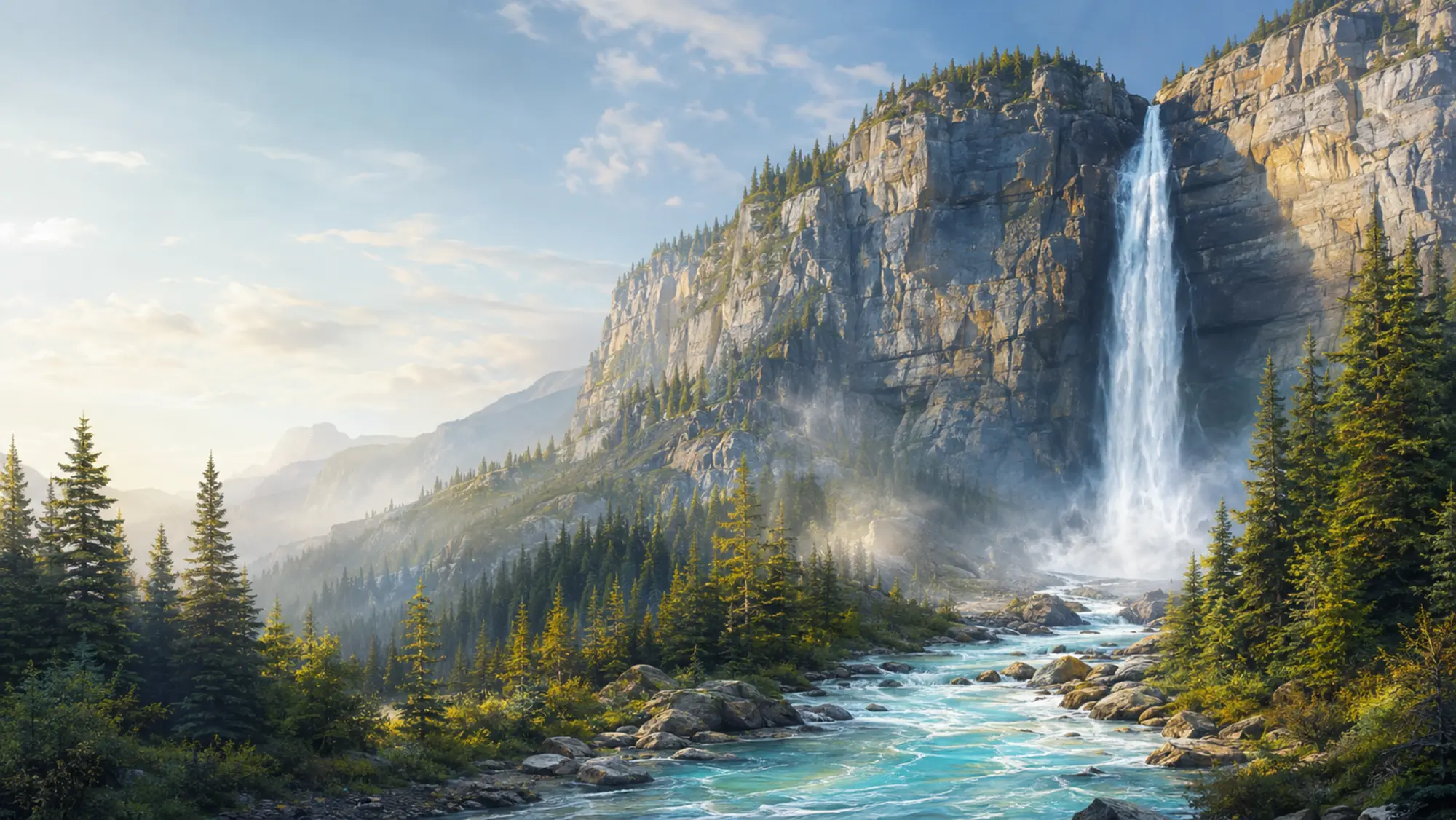
Explore Canada · Yoho National Park, British Columbia
How Water Writes the Rocks
Follow meltwater from mountain snow to a roaring waterfall, see how sediment shapes stone, and plan a thoughtful family adventure in Yoho.
- Snow & ice
- Gravity
- Transport
- Erosion
The river's clue
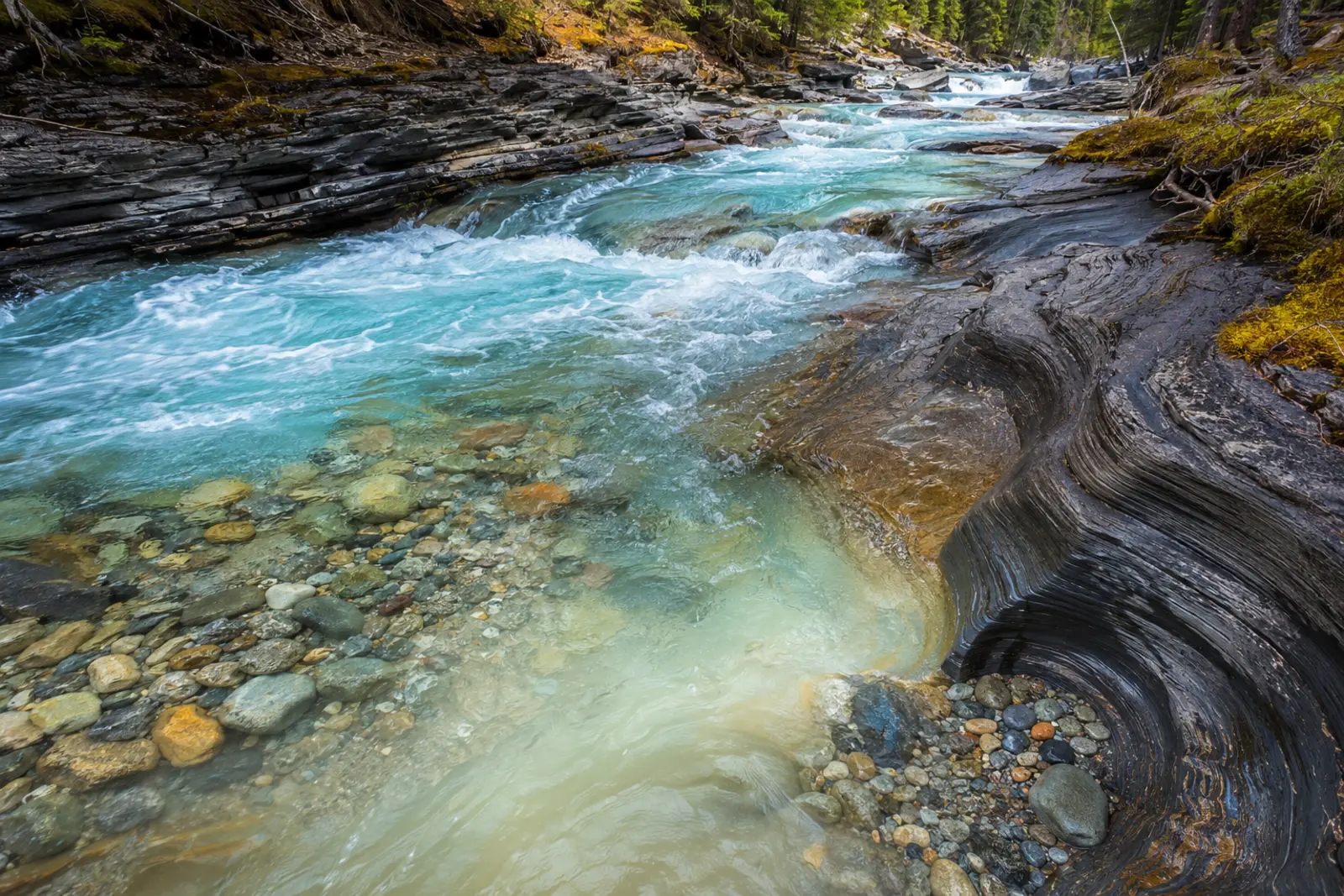
Scratches in dark rock. Smooth stones beside sharp ones. A channel cut beneath solid rock. What left all these marks?
Water writes slowly—but its sentences can become whole valleys.
Earth science for curious kids
Four ways a mountain stream changes the land
Water does more than flow. It picks up, carries, scrapes and drops sediment—and each trip leaves a tiny mark on the landscape.
- 01
Snow & ice
Warm air and sunlight release meltwater high in the mountains.
- 02
Gravity
Water runs downhill, joining tiny rills, creeks and rivers.
- 03
Transport
Fast currents can lift and roll sand, pebbles and other sediment.
- 04
Erosion
Moving sediment scrapes rock and slowly changes the channel.
 A living stream
Stream life
Every rock can be a tiny neighbourhood
Cold mountain water carries oxygen and connects pools, riffles and shaded banks. Fish find shelter near stones while aquatic insects cling to surfaces in the current.
- 01Roots hold banks. Streamside plants help soil resist being washed away.
- 02Stones make shelter. Spaces around rocks soften the current and hide small creatures.
- 03Look, do not lift. Leave rocks, plants and woody debris where they are.
Yoho protects native westslope cutthroat trout and monitors the health and connectivity of stream habitat.
Engineering for young explorers
How a suspension bridge shares the load
Instead of placing feet in a fast river or trampling a soft bank, walkers can cross on a deck held up by a connected cable system.
AnchorsSecure the main cables to strong ground on both riverbanks.
Main cablesCurve between the towers and carry much of the bridge load.
HangersVertical lines connect the main cables to the walking deck.
DeckSpreads the weight of walkers and can move a little in wind.
A bridge may sway a little as people move across it. Follow posted directions, walk calmly and give other visitors space.
 Strong parts · shared load
A bridge built by water
Natural Bridge, Yoho
Near Field, the Kicking Horse River rushes beneath a naturally formed stone bridge. It is a vivid place to spot channels, polished rock and the force of moving water—viewed from designated paths and barriers.
Official visitor detailsPlan a family visit
A water-shaped day in Yoho National Park
Build a flexible day around short viewpoints and one gentle walk. Mountain weather, streamflow, parking and closures can change quickly, so confirm conditions directly before leaving.
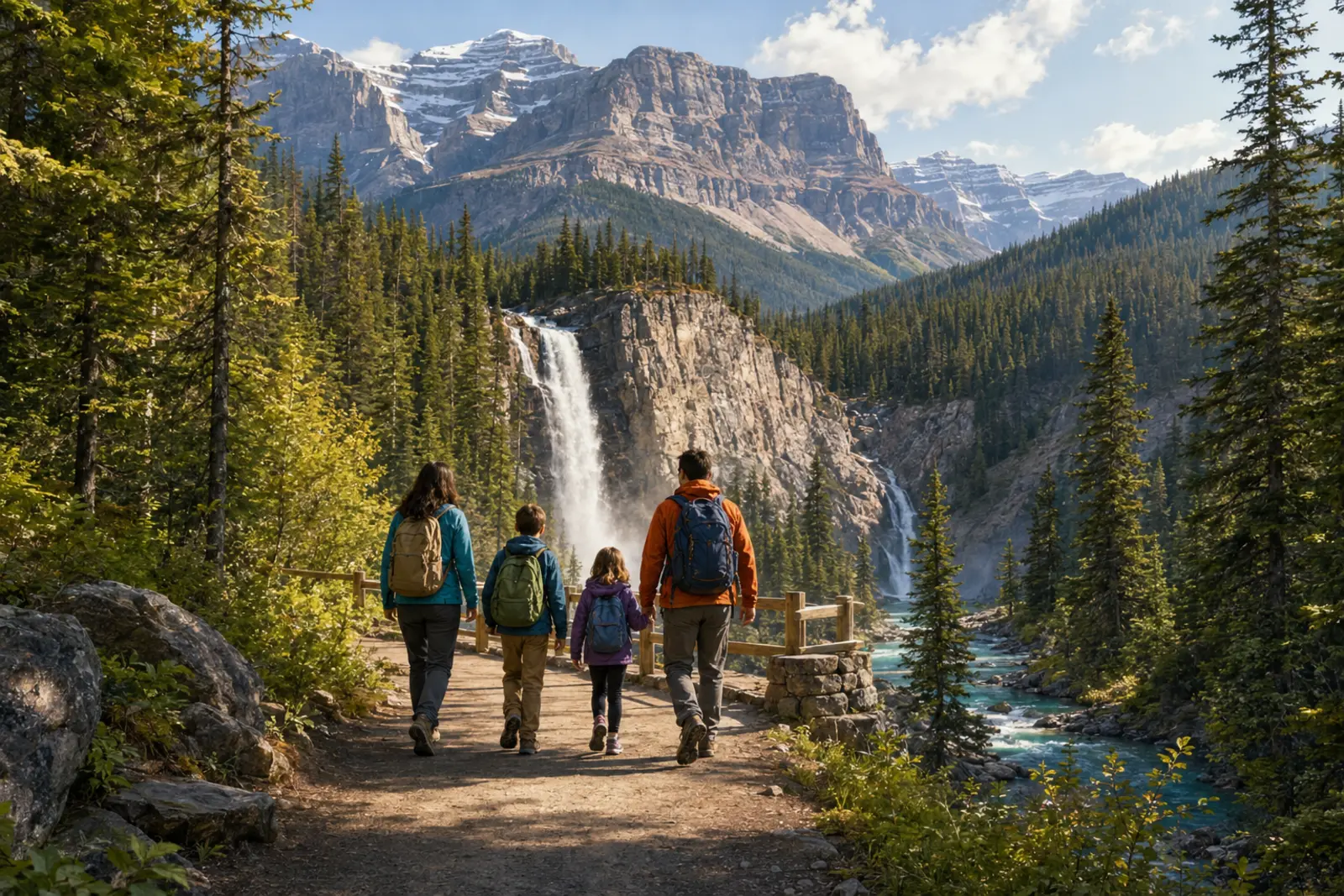
Waterfall · river clues · careful observation
Start at Takakkaw Falls
Parks Canada describes a flat, paved 0.9 km one-way walk that takes about 30 minutes return. Stay on the path and do not climb on wet rocks.
Know the road limits
Yoho Valley Road is generally open mid-June to mid-October, weather permitting. Trailers are prohibited; vehicles over 7 m must reverse through tight switchbacks.
Add Natural Bridge
Watch the Kicking Horse River pass beneath rock from the day-use viewpoints. Keep children close and remain behind barriers—the current and wet edges are powerful.
Keep a backup plan
Takakkaw Falls and Emerald Lake parking can fill early. The 5.2 km Emerald Lakeshore loop is another scenic option, but parts can be muddy and rooty.
Before you drive
Check the day, not just the season
Questions families ask
Quick answers before you go
Open each question for a practical, research-backed answer.
Is Takakkaw Falls a good stop with children?+
Yes, for many families. Parks Canada lists a 0.9 km one-way, approximately 30-minute return stroll on a flat paved path. Keep children close, stay on the path and avoid wet rocks.
When is Yoho Valley Road open?+
Normally from mid-June to mid-October, weather permitting. Trailers are not permitted and vehicles over 7 m face special switchback manoeuvres. Check the current road status before departure.
How does moving water make stones round?+
Currents roll and bounce stones against the bed and one another. Repeated collisions chip corners and abrasion smooths surfaces. The result depends on rock type, distance, current and time.
Can we wade, fish or paddle in the park?+
Do not assume so. Parks Canada has restricted fishing and watercraft use in Yoho through March 31, 2027 to reduce aquatic invasive species, with limited stated exceptions. Read the current official bulletin.
 Open the illustrated chapter ↗
Continue the adventure
Read Chapter 8: Water Writes the Rocks
Join Lumi, Aspen, Barrett and Hazel as they follow the roar of Takakkaw Falls, cross a suspension bridge and decode the marks that rushing water leaves behind.
Read the chapter PDF